“Un mundo falaz” and “Inteligencia artificial y defensa” by Ángel Gómez de Ágreda: Two Essential Works on Geopolitics, Disinformation, and Artificial Intelligence.
Posted: May 7th, 2026 | Author: Domingo | Filed under: Geopolitics | Tags: AI, artificial intelligence, Disinformation, Geopolítica, Large Language Models | Comments Off on “Un mundo falaz” and “Inteligencia artificial y defensa” by Ángel Gómez de Ágreda: Two Essential Works on Geopolitics, Disinformation, and Artificial Intelligence.Ángel Gómez de Ágreda is one of the most solid intellectual references in Spain and Europe for understanding the intersection amongst geopolitics, disinformation, and generative artificial intelligence. A retired Colonel of the Spanish Air and Space Force, engineer with a PhD, strategic analyst, and public intellectual, his work stands out for connecting philosophical reflection on truth and knowledge with the technological and military transformations of 21st century.
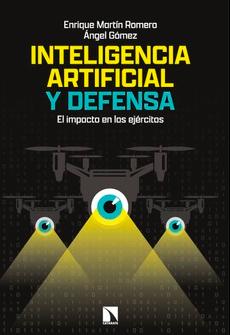
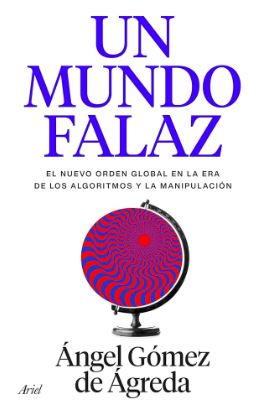
In 2025, together with Enrique Martín Romero, he published Inteligencia artificial y defensa. El impacto en los ejércitos (Artificial Intelligence and Defense: The Impact on Armies). This year, 2026, he has released Un mundo falaz. El nuevo orden global en la era de los algoritmos y la manipulación ((Fake New World. The New Global Order in the Age of Algorithms and Manipulation). The central idea around which both works revolve is the following: global power is no longer measured solely by the economic or military capabilities of states, but by their ability to shape the perception of reality for millions of people.
Gómez de Ágreda’s thesis begins with an essential observation: technology does not create our weaknesses; it simply amplifies those that already exist. Politics, digital platforms, and now generative AI exploit the human tendency to accept narratives that emotionally align with our prior beliefs. The German philosopher Markus Gabriel defines this condition as post-reality: a stage in which societies no longer merely manipulate others, but actively participate in their own collective self-deception. The phenomenon goes beyond classic post-truth; it entails the gradual replacement of facts with narratives designed to be shared, viralized, and emotionally effective.
Social media first, and generative AI later, have accelerated this process to unprecedented levels. Gómez de Ágreda argues that we have delegated not only cognitive tasks to machines, but even the search for knowledge itself. What once required comparing sources and developing personal judgment is now resolved through an instant query to an LLM. Large language models function as digital oracles whose authority is perceived as neutral and infallible, despite the fact that no AI can ever truly be neutral, impartial, or objective. Algorithms are only as neutral as the programmers behind them.
The problem is that, in a context of cognitive saturation, people tend to accept automated responses with little questioning. This is where the transition occurs from technical manipulation to emotional manipulation: the moment when machine dominance ceases to operate over what we think and begins to operate over what we desire. Machines allow us, in a sense, to “want to want.” They give us reasons to want to fall in love, to want to love. More than satisfying the need to receive affection, they address our impulse to offer it. This connects with the Spanish philosopher José Antonio Marina’s accurate description of the contemporary individual as “credulous, passive, gregarious, isolated, and anti-Enlightenment.” The result is an individual incapable of withstanding the pressure of the surrounding environment.
This social and ontological transformation has direct consequences for contemporary geopolitics. For Gómez de Ágreda, the classical concept of sovereignty must evolve into the idea of cognitive sovereignty: the ability of a country or community to preserve interpretive autonomy against external manipulation campaigns. Disinformation ceases to be a marginal phenomenon and becomes a strategic resource aimed at shaping emotions, altering perceptions, and conditioning collective decisions. In this scenario, the true battlefield is no longer confined to physical borders, but lies within societies themselves.
Contemporary military doctrines reflect precisely this evolution. The author cites Russian analyst Dmitri Trenin to explain how current strategies no longer necessarily seek territorial occupation, but rather internal chaos and psychological destabilization. The Gerasimov Doctrine and the concept of reflexive control aim to alter the adversary’s perception of reality. Cognitive warfare therefore seeks not merely to control information, but to directly influence the mental processes of entire populations. As Gómez de Ágreda reminds us, while information warfare operates on content, cognitive warfare targets the human brain itself.
Generative AI exponentially multiplies the scope of these operations. The ability to produce synthetic texts, audio, images, and videos that are virtually indistinguishable from reality radically transforms the information environment. Unlike traditional propaganda, messages can now be tailored to each psychological profile, disseminated on a massive scale, and adapted in real time according to audience reactions. Gómez de Ágreda describes disinformation as functioning through an organized chain of actors: activators, amplifiers, legitimizers, dissemination bots, and relaunchers. Generative AI drastically reduces the cost and time required to deploy such campaigns, making them practically ubiquitous.
One of the most disturbing examples cited in Un mundo falaz is GoLaxy, a system already operating in China that can generate highly realistic artificial avatars capable of emotionally interacting with real users. These synthetic identities can operate simultaneously on a massive scale, without arousing suspicion, while adapting psychologically to each interlocutor. Manipulation is no longer confined to the ideological sphere; it shifts into the emotional domain. Machines no longer condition only what we think, but also what we desire.
China appears in both books as the geopolitical actor that has best understood the strategic potential of AI. Beijing has developed an ambitious roadmap to make this technology the core of its economic, industrial, and military development. According to the official Chinese document Opinions of the State Council on the Deep Application of the R&D Initiative, published in August 2025, the goal is to achieve 70% penetration of intelligent terminals and AI agents across six key sectors by 2027: science and technology, industry, consumption, social welfare, government, and global cooperation. By 2030, penetration is expected to reach 90% across the entire economy. By 2035, AI should become as universal as electricity is today, equivalent to what the internet represents in our era. By 2037, industries themselves are expected to be created with AI as both their foundation and guiding principle. Just as a new economy emerged around the internet, the report proposes that the next industrial system will be built around algorithms.
The United States, fully aware of this technological competition, has responded by accelerating its own military generative AI programs. In 2023, OpenAI, Google, Anthropic, and xAI received multimillion-dollar contracts from the Department of Defense to develop intelligence and combat simulation applications. At the same time, Washington has imposed restrictions on U.S. investments in AI technologies directed toward China, aiming to slow the development of Chinese military AI and preserve the West’s technological advantage. The geopolitical rivalry of the 21st century is now being fought in the domain of semiconductors, data centers, and algorithms.
However, Gómez de Ágreda warns that the impact of AI is not limited to the balance between great powers. Recent conflicts show how this technology is also transforming conventional warfare. The war in Ukraine and the earlier Nagorno-Karabakh conflict have demonstrated that small autonomous systems, inexpensive drones, and accessible AI capabilities can create enormous asymmetries against vastly more expensive weaponry. The battlefield of the future will be hybrid: physical, digital, and cognitive simultaneously.
Yet perhaps the author’s deepest warning is philosophical in nature. In a world saturated with information, the primary threat is not merely technological, but epistemological. If every act of understanding necessarily involves interpretation, as philosopher Hans-Georg Gadamer argued in his book Truth and Method, then the struggle to control interpretive frameworks becomes a struggle to control reality itself. That is why Gómez de Ágreda insists on recovering critical thinking and philosophical reflection as tools of democratic defense. The great battle of 21st century will not be decided solely in AI laboratories or military arsenals, but in societies’ ability to preserve their cognitive freedom against a technological ecosystem designed to influence, seduce, and manipulate.